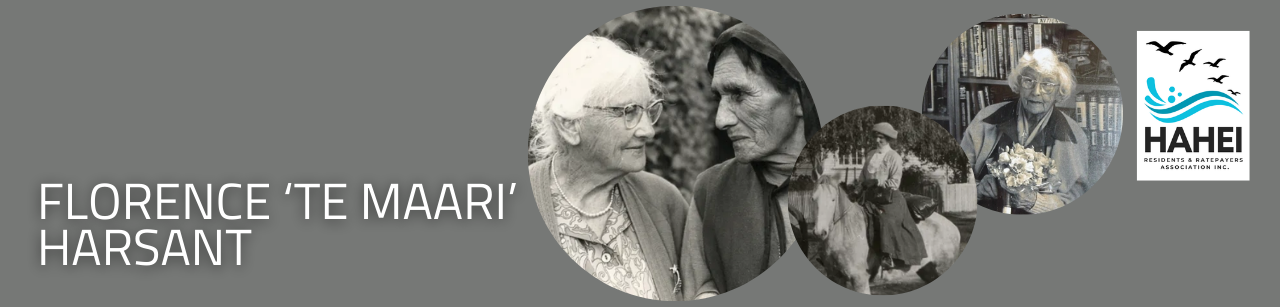
Florence Harsant was born in 1891 in New Plymouth, into a family where education and public service were part of everyday life. As a child she spent time living within a Māori community at Waitahanui, where she learned te reo Māori and developed a deep respect for Māori culture—connections that would shape the rest of her life. She later trained as a nurse and worked widely across rural New Zealand, often in isolated communities where practical help, education, and compassion mattered just as much as formal medical care.
In 1919, Florence married Horace Harsant, a farmer from Hahei, and the small Coromandel settlement became her home for decades. Life in Hahei in the early 20th century was remote and demanding. Access to doctors, books, and wider services was limited, and communities relied heavily on their own initiative and mutual support. Florence quickly became known as someone who quietly stepped in wherever help was needed—whether through nursing, writing, organising, or simply encouraging people to learn and look beyond their immediate circumstances.
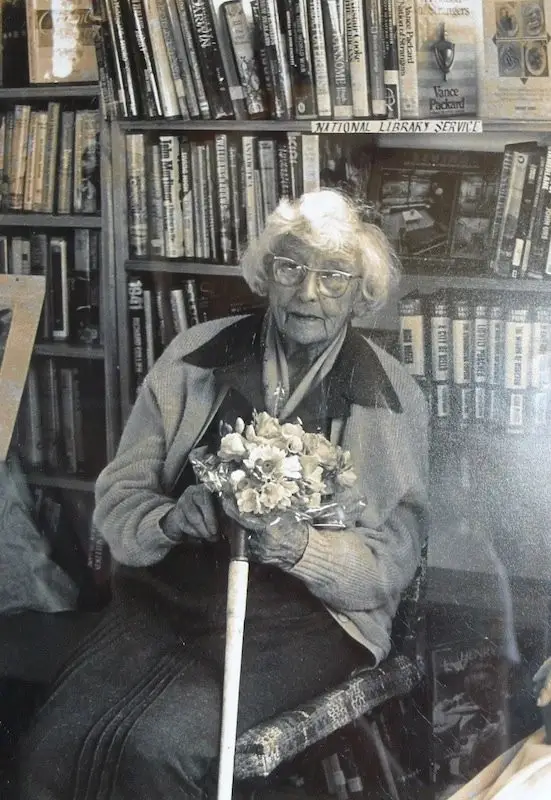
Her love of reading and belief in self-education were central to who she was. Florence believed that books could open doors, especially for people living far from towns and formal institutions. In 1952, acting on that belief, she and her son Vaughan began a small public library in their own home in Hahei, operating under the Country Library Service. What started as shelves of borrowed books in a private house gave the community regular access to reading material for the first time and laid the foundations for what would become the Hahei Community Library.
Florence also recorded her experiences in writing. Her autobiographical book, They Called Me Te Māari, provides a vivid and personal account of life in early 20th-century New Zealand, particularly in rural and Māori communities, and remains an important historical record. A copy is held in the Hahei Community Library for those wishing to better understand the world she lived and worked in.
Her lifetime of service was formally recognised in 1981, when she was awarded the Queen’s Service Medal (QSM). Florence lived to the age of 102, passing away in 1994, having seen the small home-based library she started grow into a permanent and much-loved community institution.
The naming of the Florence Harsant Library reflects not just one achievement, but a life shaped by service, learning, and inclusion. It stands as a lasting tribute to her belief that access to knowledge strengthens communities—and that even small, determined actions can leave a legacy that endures for generations.